
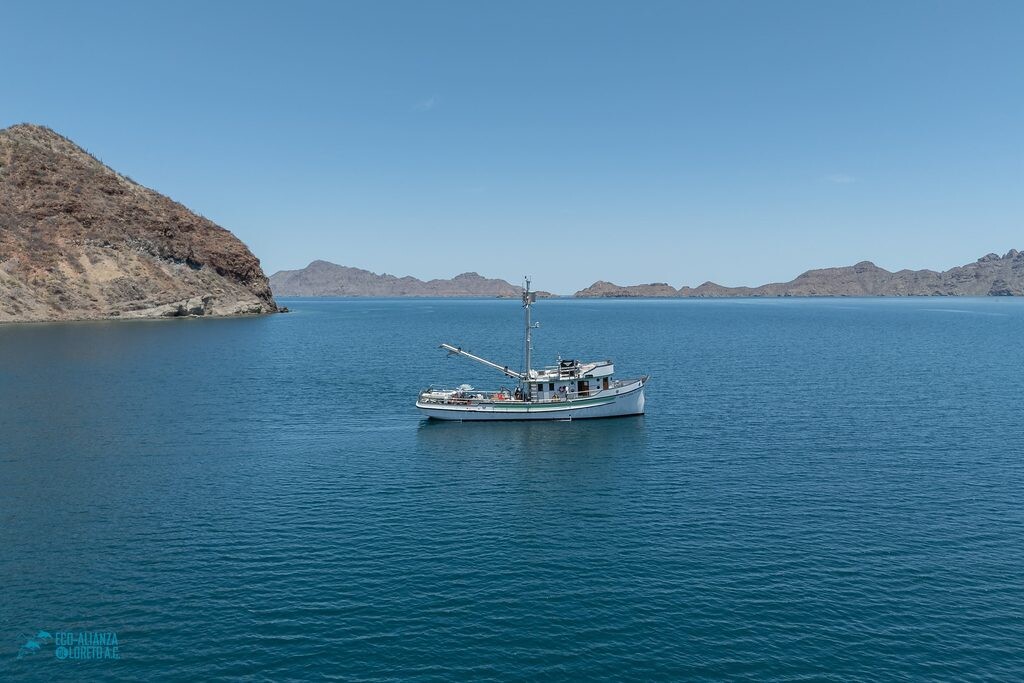
What if you could follow the Western Flyer on an expedition and see not only where the vessel is going, but what it is observing along the way?
Through a growing partnership between the Western Flyer Foundation and the Naval Postgraduate School (NPS), researchers and students are exploring new ways to use data collected aboard the Western Flyer to support research, education, and public understanding of the ocean.
One of the newest results of that partnership is VIGOR, short for Visualizing Integrated Geospatial Observational Records.
Developed by local high school student Brady Liang during a research internship with Professor David Ortiz-Suslow and his team at NPS, VIGOR is an interactive platform that brings environmental field data to life on a map. The platform allows users to explore historical and live environmental observations collected from ocean and atmospheric research platforms—and the Western Flyer is one of the first vessels featured.
“The best part of developing VIGOR has been combining wildly different types of datasets, from historical ship expeditions and airplane flights to live ship tracking, into a single website with highly customizable settings,” Brady said. “The platform also makes it easy to add new datasets.”
Replaying the Western Flyer Baja Expedition
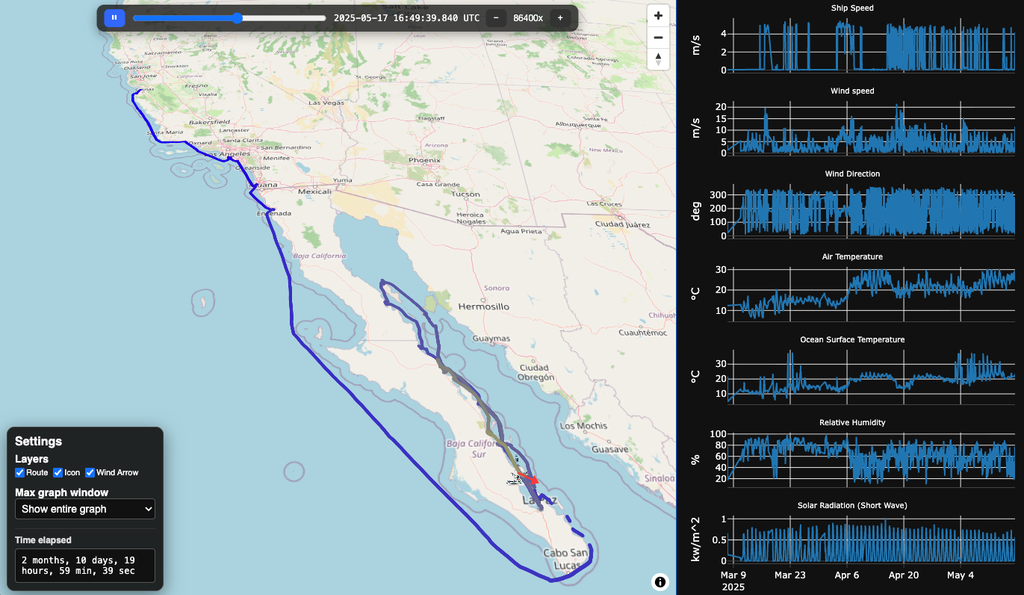
One of the datasets currently available through VIGOR comes from the Western Flyer 100-day Baja expedition in 2025.
Users can follow the vessel’s route on an interactive map and replay the journey over time. As the Western Flyer moves along its track, graphs display environmental measurements associated with different points in the expedition, allowing users to see how conditions changed along the way.
The result is more than a record of where the vessel traveled. It connects each location with the environmental conditions observed there, helping users experience the expedition as it unfolded.
Following the Western Flyer Live
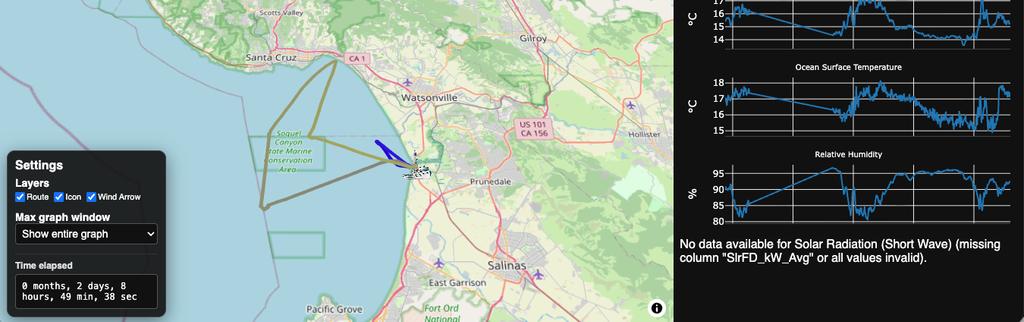
VIGOR also offers something particularly exciting: live data from the Western Flyer.
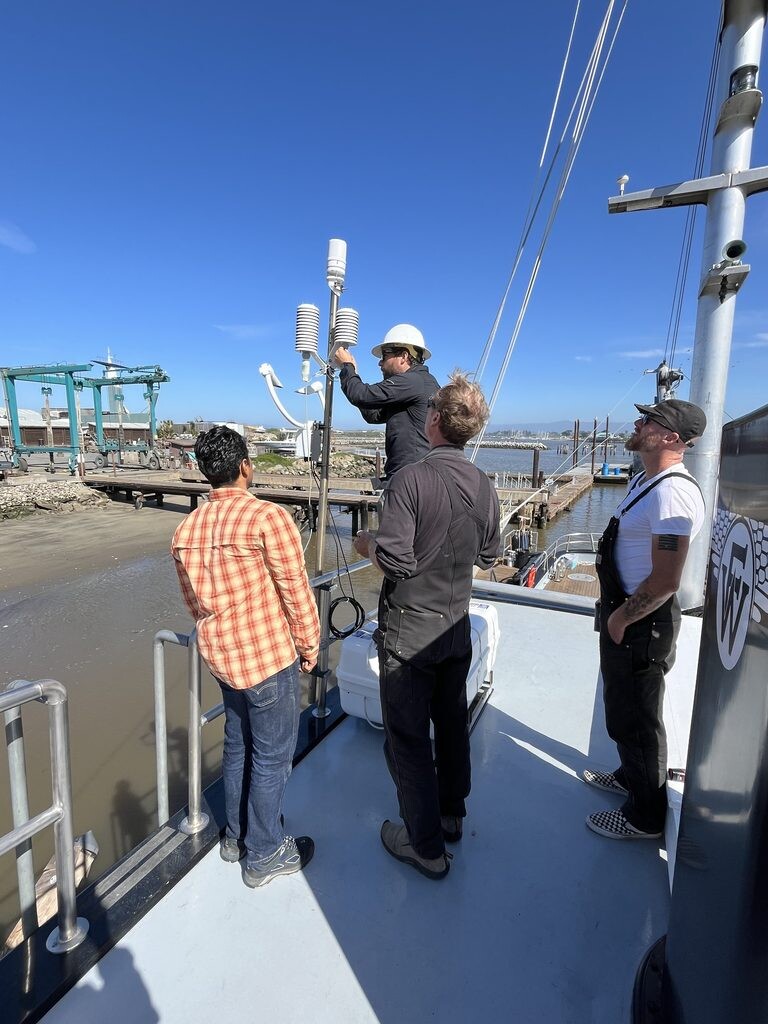
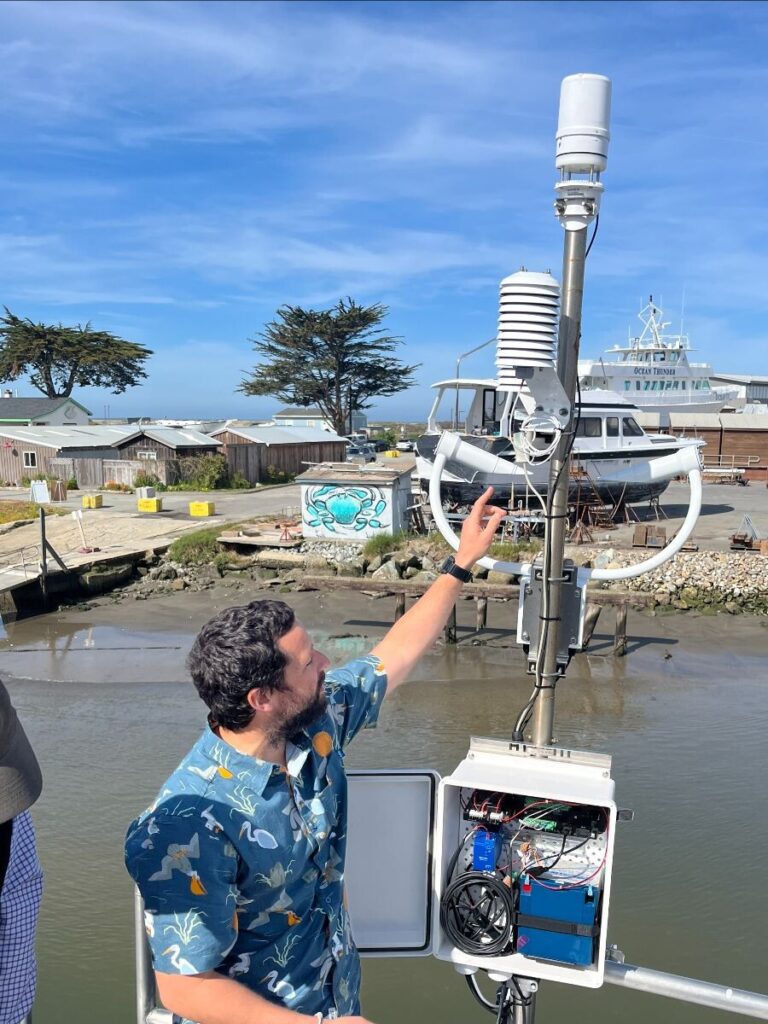
The vessel’s meteorological array is now connected directly to the system. As measurements are recorded aboard the Western Flyer, the data are transmitted through the vessel’s onboard internet connection to the VIGOR display website, which is hosted on Amazon Web Services.
Zoom in on Monterey Bay and you’ll find a red LIVE icon. Click it to see the Western Flyer location along with environmental observations received from the vessel. The display updates every five minutes and shows data collected during the previous seven days.
For the Western Flyer Foundation, this opens up some intriguing possibilities. Students could follow an expedition from their classroom, explore conditions being recorded aboard the vessel, or return to a past voyage and examine observations in the context of exactly where and when they were collected.
Connecting Research and Education
The larger vision at NPS’ Department of Meteorology is to integrate field observations, such as from the Western Flyer, with weather forecast data and satellite imagery, creating a single platform that can support both research and education.
Imagine students comparing what instruments aboard the Western Flyer actually observed with what a weather model predicted. Where did they agree? Where did they differ? And why?
There is still more development ahead, including adding datasets, expanding the platform’s analysis capabilities, and continuing to test the Western Flyer live-data connection during longer deployments.
Brady’s vision for the platform is expansive.
“I envision VIGOR displaying data for thousands of moving ships and airplanes,” he said.
A Collaborative Effort
Reflecting on nearly a year of work, Brady emphasized that VIGOR has been a team effort.
“I am honored to have had the privilege of working with Prof. Ortiz-Suslow and his wonderful team for nearly a year,” Brady said. “Together, we navigated all the ups and downs, from envisioning the plan and setting up Amazon Web Services to connecting the final website to the legendary Western Flyer. This project would not have been possible without the guidance of Prof. Ortiz-Suslow, Prof. Powell, and Jesus Ruiz-Plancarte.”
We’re grateful to Brady for his impressive work developing VIGOR, and to David Ortiz-Suslow, Jesus Ruiz-Plancarte, Scott Powell, and the entire NPS team for making the Western Flyer part of this evolving project.
VIGOR is an exciting example of what can emerge from the Foundation’s partnership with NPS: new tools that connect researchers, students, and the public with data collected aboard the Western Flyer. It also demonstrates how those observations can continue to support exploration, research, and learning, both while the vessel is underway and long after an expedition ends.
Written by Sherry Flumerfelt, Executive Director, Western Flyer Foundation
Publicado en Blog, Education, Research