
By Rials Christensen, Education Manager
A field trip—the disruption from routine and intentional undertaking of new experiences—evokes a nervous, giddy type of excitement that feels familiar whether you were a student decades ago, or just stepped off the bus this morning. When students gather for their day of discovery aboard the Western Flyer, this potent energy becomes part of the lesson plan.
A Different Kind of Classroom
With younger students, this often means leaning into the spirit of adventure. They’re all giddy laughter, backpacks swinging as they race after Banjo, the newest addition to the Moss Landing fleet of dockyard dogs. They connect to the story of the Flyer when we tell them about two best friends—John Steinbeck (“Hey, I’ve heard of him!”) and Ed Ricketts—who set off on a journey so grand that here we stand, 85 years later, still talking about it. We prompt them to imagine what it might be like to travel 4,000 miles on an old wooden boat with your best friend.
From Curiosity to Confidence
High school students can be more reserved, clustered in tight groups, keen eyes observing and assessing. They may not laugh as freely as their younger counterparts at first, but when they do, it is no less loud. With these students, we ask them to imagine the headspace Steinbeck and Ricketts may have occupied in 1940. A world at war; both had just written their best-known works—Steinbeck’s The Grapes of Wrath catapulted him to fame but also ran him out of his hometown; Ricketts’ Between Pacific Tides took over a decade to write but was scorned by some in the scientific community. What might it have felt like to step onto a boat with your best friend when the world was on the brink, and your place in it was uncertain?
Here, we hand each student a blank notebook. We call it their Log of the Western Flyer. It’s theirs to keep; a place to record observations, jot down data, or write a thought they might not want to share out loud. This is a simple but effective tool to engage students and weave a common thread between the day’s activities. Long before students set foot on the dock, their program has been developed with their teacher. Students rotate through a set of hands-on stations, carefully selected to match the interests and experience level of their class. Every program is structured yet flexible—interdisciplinary by design, mixing history, marine science, and environmental stewardship.
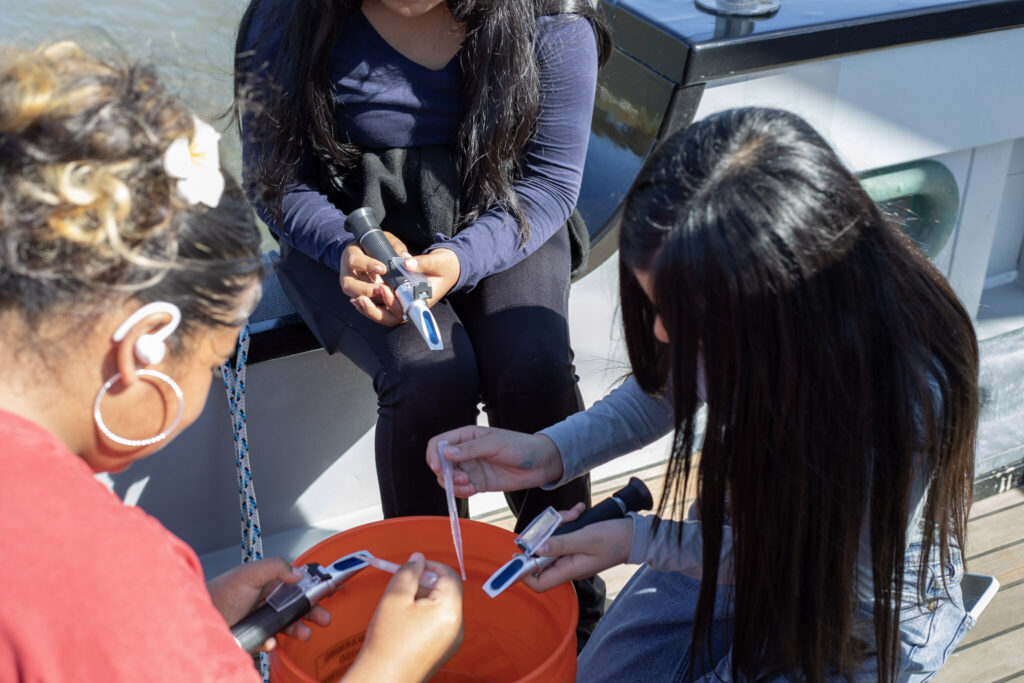
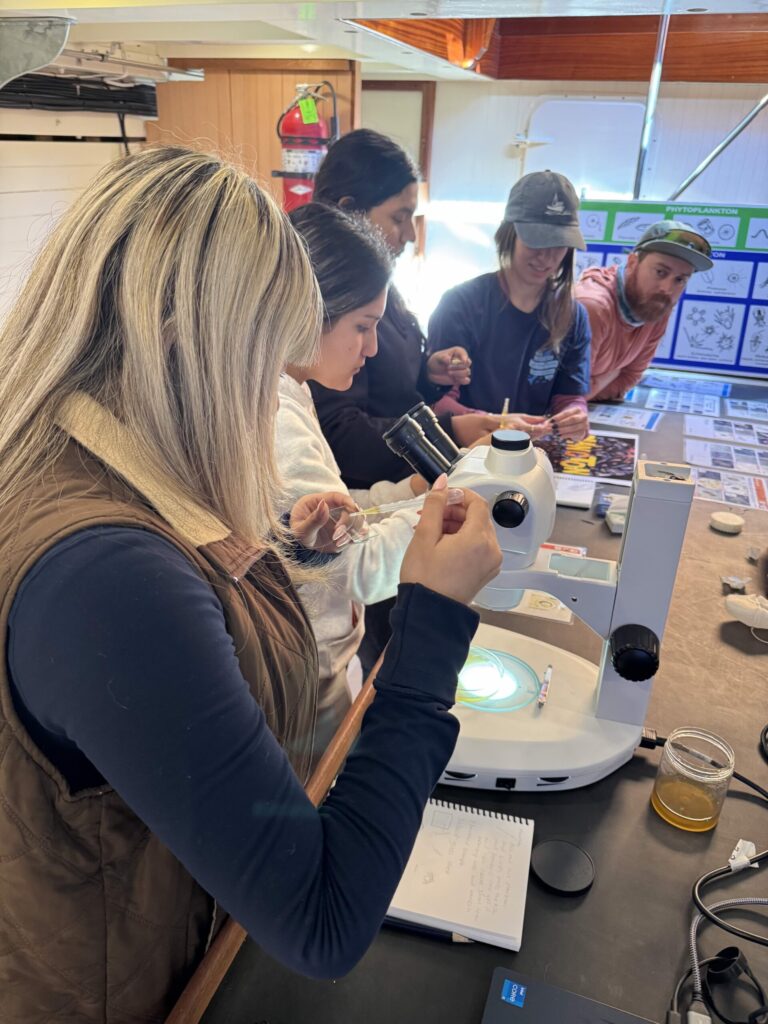
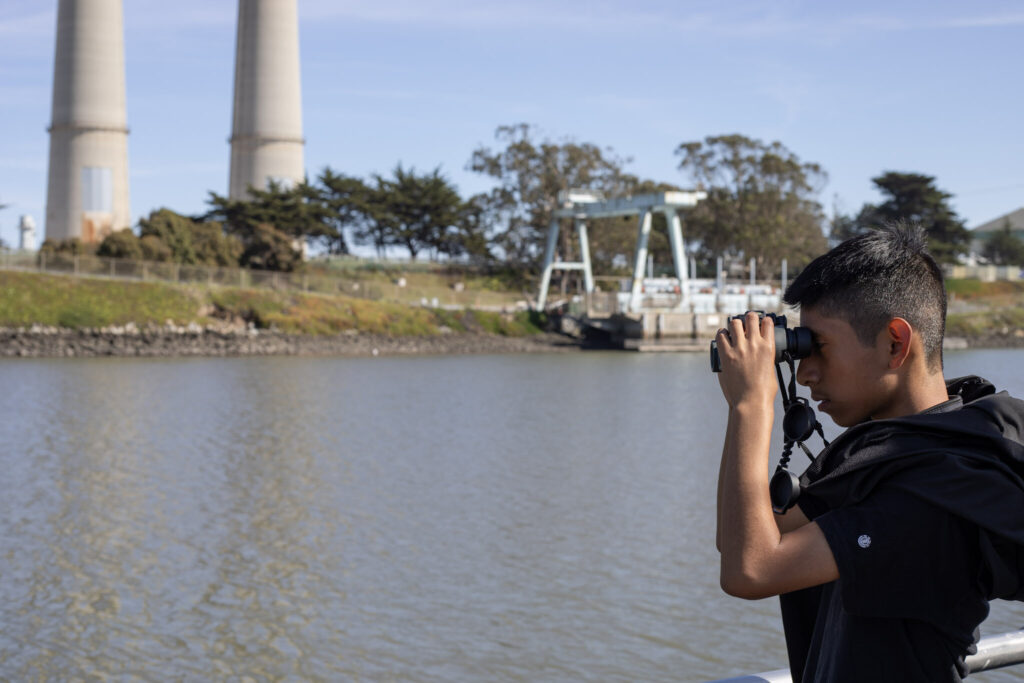
While onboard the Western Flyer, students tour the vessel and imagine the legendary voyage to the Gulf of California, as well as the Flyer’s decades-long fishing career. Students ponder over the barnacle scars visible in the bathroom—evidence of her time sunk and seemingly forgotten before being restored. Below deck, in the fish-hold-turned-lab, students get hands-on with the oceanographic equipment that defines the Flyer’s new career as a research vessel. Depending on the day, they might observe marine life from the deck, measure water quality, or haul up a plankton tow to see what’s drifting through Elkhorn Slough.
Conversations at these stations are scaled to the group. With elementary students, we might talk about food webs and consider how the plankton they observed under the microscope in the ship’s lab influences the sea lions swimming off the bow. With high schoolers, we dive deeper into the history of conservation, using Elkhorn Slough itself as a powerful case study in restoration and stewardship.
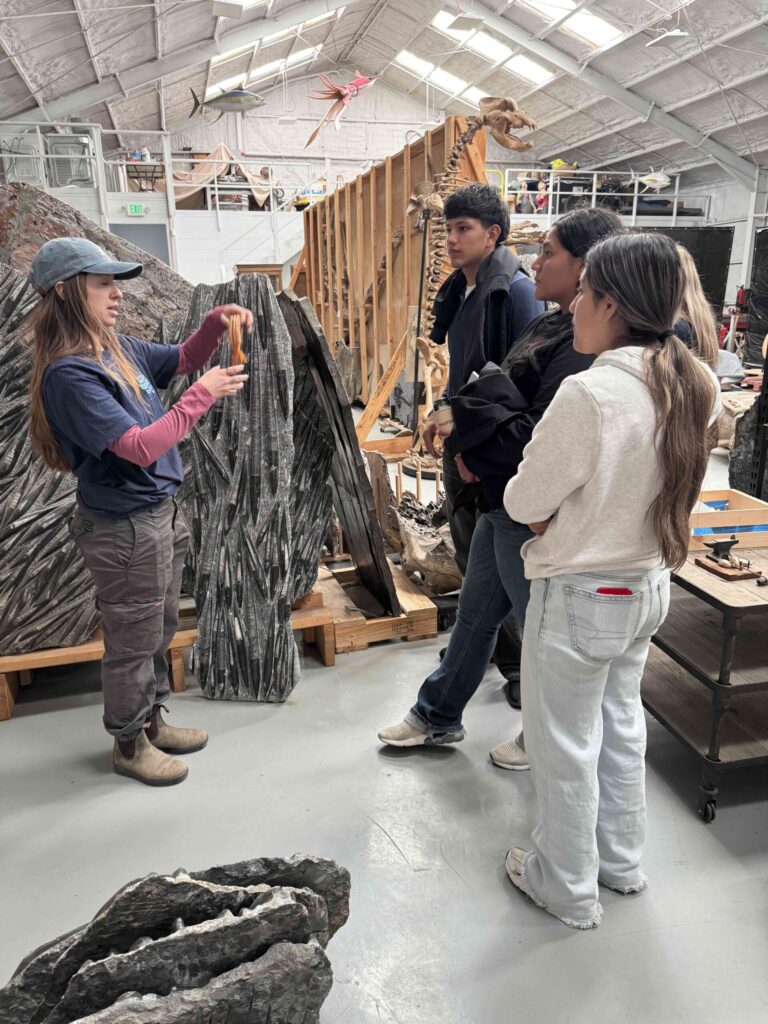
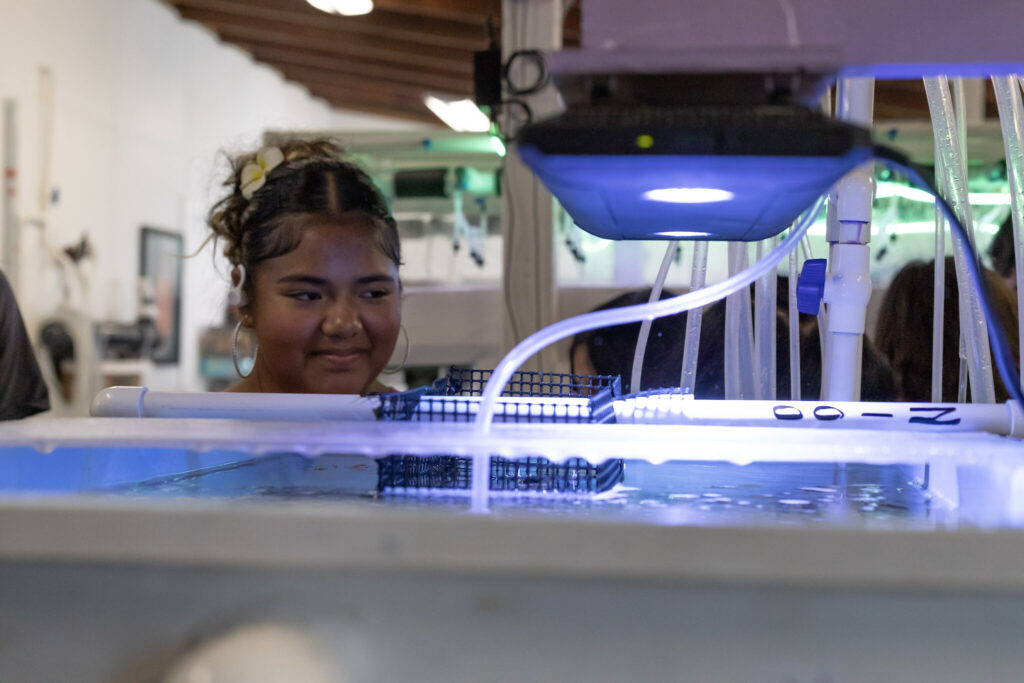
Off-boat, we take advantage of the unique setting of Moss Landing. Students visit our neighbors at the Sunflower Seastar Lab to learn about urgent conservation and restoration work that is saving species critical to the Monterey Bay ecosystem. At a private dockyard fossil collection (Moss Landing really is unique), we apply a Rickettsian ecological lens to the paleo world, prompting students to look for connections between ancient creatures just as Ed Ricketts looked for connections in the tide pool.
When Science Becomes Real
The feeling at the end of a good field trip is just as recognizable as the buzzing excitement at its beginning. As students climb back onto the bus, we share in that tired but contented glow. We hope they remember how to use a refractometer or recognize an ammonite’s suture pattern, but more than any single fact, we want them to leave feeling like the world around them is filled with interesting things and that they already showed up with the only tool they truly need to explore it: curiosity.
For another perspective on a day aboard the Western Flyer, you can read a field trip recap prepared by our partners at the Center for Land-Based Learning: Read the Field Trip Recap.