
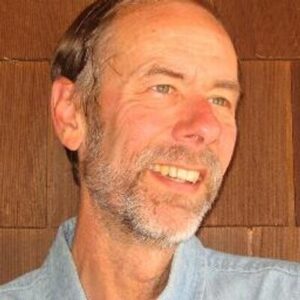
Tom Keffer
Board PresidentTom Keffer has worked as an oceanographer, a CEO of a public software company, an investor, and with non-profits.
After receiving his PhD from Oregon State University in 1980, he worked at Woods Hole Oceanographic Institution, Woods Hole, Massachusetts, first as a Postdoctoral Fellow, and then later as a member of their faculty, focusing on the oceanography of the oceans during the last ice age, and on how atmospheric gases get absorbed into the ocean. From 1985 to 1989 he was on the faculty of the University of Washington, Seattle, Washington, again, focusing on climate studies. He is the author of thirteen refereed publications in journals such as Science, Nature, and the Journal of Marine Research, as well as the author of many technical reports and talks.
In 1989 he co-founded Rogue Wave Software, Inc, in Corvallis, Oregon, becoming its Chairman, President, and CEO. The company did an IPO on the NASDAQ exchange (sticker RWAV) in 1996, followed in 1997 by a secondary offering. He retired as CEO in 1998.
During the 2010s, he focused on angel and venture investing in Oregon-based companies. He was president of 1000 Friends of Oregon, a land-use advocacy organization. He also worked as an advisor to Mercy Corps on their economic development programs, an experience which took him to Indonesia, Gaza, Sri Lanka, Nepal, Mongolia, and other places. In his spare time he enjoys racing his J/42 sailboat.
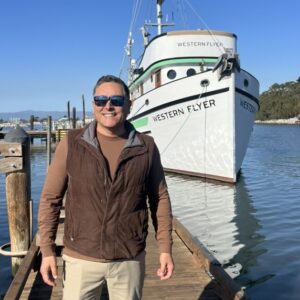
Efrain Corea
TreasurerThe son of migrant farm workers, Efrain Coria was born and raised in Watsonville before pursuing his education at Santa Clara University and beginning a career in finance, facilitating the provision of accessible, culturally-appropriate medical and mental health care in underrepresented communities in Santa Clara County. As CFO and COO at Gardner Health Services, he has overseen the growth of a $5 million budget to over $100 million, utilizing the skills in finance and operations that enable him to create networks that serve Media-Cal, Medicare, and low-income patients across Santa Clara and nearby counties. He has served as Board Chair of MACLA, an urban arts space in San Jose rooted in the Chicano/Latino experience, and splits his time between Gilroy, California, and various parts of Mexico.

Susan Shillinglaw, Ph.D
Board SecretaryBorn in Iowa, raised in Colorado, Susan Shillinglaw graduated with a B.A. in English and Art from Cornell College and earned a Ph.D. in English from the University of North Carolina, Chapel Hill. Since 1984, she has been a Professor of English at San Jose State University (currently FERPing), where she was Director of the University’s Center for Steinbeck Studies for 18 years. In 2012-13 she was named the SJSU President’s Scholar. She was also Director of the National Steinbeck Center in Salinas from 2015-2018.
Dr. Shillinglaw has published widely on John Steinbeck, most recently Carol and John Steinbeck: Portrait of a Marriage (U of Nevada P, 2013) and On Reading The Grapes of Wrath (Penguin, 2014); and A Journey into Steinbeck’s California (3rd edition, 2019) She also wrote introductions to several of Steinbeck books for Penguin New American Library editions. Currently, she is writing a book Steinbeck’s landscapes.
She has served on the boards of Hopkins Marine Station, the Cannery Row Foundation, SJSU’s Center for Steinbeck Studies, the National Steinbeck Center, the Monterey Museum of Art and the Western Flyer Foundation.
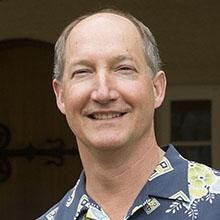
Jack Barth
Board MemberJack Barth is a Professor of oceanography in Oregon State University’s (OSU) College of Earth, Ocean, and Atmospheric Sciences. He received a Ph.D in Oceanography from the Massachusetts Institute of Technology and Woods Hole Oceanographic Institution Joint Program in Oceanography. He is a Fellow of The Oceanography Society and of the American Meteorological Society. He is also the Executive Director of OSU’s Marine Studies Initiative, a new program to unite marine-related research, teaching, and outreach and engagement across OSU and the state of Oregon. The mission of the Marine Studies Initiative is to create a healthy future for our ocean and the planet through transdisciplinary research and teaching that emphasizes collaboration, experiential learning, engagement with society and problem solving.
His research seeks to understand how coastal ocean circulation and water properties shape and influence marine ecosystems. He has led a number of research, technology development and ocean observing system projects off Oregon and around the world. He has published widely on coastal oceanography and marine ecosystems. His present research includes a focus on the characteristics and formation of low-oxygen zones off the Pacific Northwest. His research team uses autonomous underwater gliders, robots beneath the sea surface, logging hundreds of thousands of kilometers of measurements. From 2004 to 2007, he was a member of the National Science Foundation’s Observatory Steering Committee that launched the Ocean Observatories Initiative, the largest ever civilian investment by the U.S. in in-water ocean measurements. From 2013-2016, he served on the U.S. West Coast Ocean Acidification and Hypoxia Science Panel, and from 2017-2022, he co-chaired Oregon’s Ocean Acidification and Hypoxia Coordinating Council. He is a member of the North Pacific Marine Science Organization (PICES) Governing Council and the National Academy of Science's Committee on Environmental Science and Assessment for Ocean Energy Management.
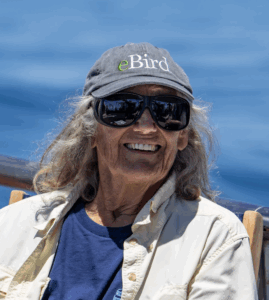
Nancy Burnett
Board MemberNancy Burnett is a marine biologist and philanthropist with a lifelong dedication to ocean conservation and education. A co-founder of the Monterey Bay Aquarium, she has played a pivotal role in advancing public understanding of marine science and the protection of ocean ecosystems. Nancy has served on the boards of the David and Lucile Packard Foundation and the Monterey Bay Aquarium Research Institute (MBARI), guiding major investments in research and environmental stewardship. She also co-founded the Sea Studios Foundation, the award-winning production company behind The Shape of Life and other groundbreaking ocean science documentaries. In 2004, she was part of the expedition that retraced John Steinbeck and Ed Ricketts’s journey to the Gulf of California, and in 2025, she returned to those same waters with the Western Flyer. A valued friend and supporter of the Foundation, we are honored to welcome her to the Board.
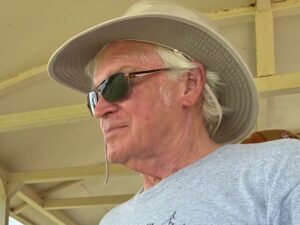
Brooks McChesney
Brooks McChesney has been a entrepreneur and senior executive in technology companies spanning multiple vertical markets and industries. Combining legal and business background, he has taught social entrepreneurship at the Middlebury Institute of International Studies in Monterey, served as an Entrepreneur-in-Residence at Intel, and was a founder of the Start-Up Challenge Business Plan Competition at CSUMB.
He has consulted with a variety of venture funds and companies providing management and consulting services to help prepare their initial business plans, secure funding and develop successful sales and marketing strategies.
He is an active member of the Stanford Alumni Consulting Team, which provides pro-bono management consulting to Central Coast nonprofits and has served on the Board of Monterey Bay DART, advancing uncrewed aircraft systems and advanced air mobility, and was past President of the Board of the Center for Photographic Art in Carmel.
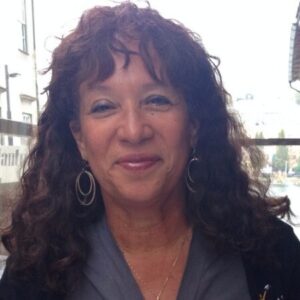
Linda Powell-McMillan
Board MemberLinda Powell-McMillan is first and foremost a teacher. She taught elementary grades at a small rural school in Shandon CA and taught Biology and Chemistry in Paso Robles High School for 12 years. She left the classroom to become a California Regional Director for AVID (Advancement Via Individual Determination), a college preparatory system in the US, designing and facilitating professional learning for teachers in the US, Australia, and for Department of Defense teachers in Europe and the Pacific. She worked as a National Director for Professional Learning for AVID. Most recently she has been working internationally (in-country and online) as an Education Consultant for AVID Australia, coaching Australian elementary and secondary teachers in the teaching and learning strategies of AVID
She received a Bachelor of Science in Renewable Natural Resources from the University of California, Davis, then returned to UC Davis to earn a Master of Science in Ecology. She holds Elementary and Secondary Teaching Credentials and an Administrative Services Credential from California Polytechnic State University. She was the co-Director of the California Science Project at the University of California, Santa Barbara.
Her interest in natural history and conservation led to a career as a wildlife film maker and photographer for the National Audubon Society. She, along with her husband, Greg, produced 90-minute wildlife films on the Outback of Australia, the flora, fauna and people of Papua New Guinea, the Gray Whales of Baja California. She was field tour leader of natural history journeys in Baja California for Red Hills Films and Natural History Tours. During a year’s sabbatical in Chile, her photographs and essays became part of Chile’s first national webpage.
She lives in the Central Coast of California in an off-the-grid strawbale home, on a ranch raising grass-fed beef and olives for oil.
Emeritus Board
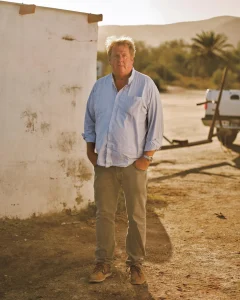
John M. Gregg
Founder and DirectorJohn Gregg has been involved in the geotechnical and environmental sampling business for 40 years. He was the founder and President of Gregg Drilling & Testing, Inc., and is currently involved in the design and implementation of deep-sea sampling systems at great depths in oceans around the world. When John was ten years old, he picked up a copy of The Log from the Sea of Cortez and was forever changed by it. In 2015, he purchased the Western Flyer and founded the Western Flyer Foundation to continue the legacy started by Steinbeck and Ricketts back in 1940.
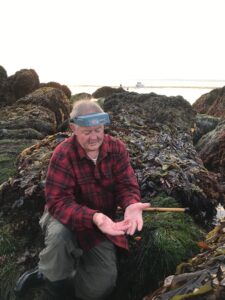
William Gilly, Ph.D
William Gilly is a Professor of Biology at Stanford University based at Hopkins Marine Station in Pacific Grove, CA. He was one of the Western Flyer Foundation’s founding board members, serving on the Board between 2015 and 2024. Gilly was instrumental in moving the Western Flyer vision from a concept to reality and continues to support the work of the Foundation as an advisor and partner, helping to bridge connections between the scientific community and the Foundation’s mission.
Dr. Gilly received a B.S.E. in electrical engineering from Princeton University and a Ph.D. in physiology and biophysics from Washington University after carrying out his thesis research at Yale University Medical School. He was a postdoctoral fellow at the University of Pennsylvania in the Departments of Biology and Physiology and began working with squid during this time at the Marine Biological Laboratory, Woods Hole, MA.
His research has ranged from biophysical and molecular analyses of excitability mechanisms in nerve and muscle cells of a variety of invertebrates, but primarily squid, to oceanographic changes in the Gulf of California and Monterey Bay. His group was the first (and only) to deploy pop-up satellite tags and video-monitoring devices (National Geographic Crittercam) on large Humboldt squid to record their second-to-second vertical movements and color-changing behaviors. His current research focuses on the physiological mechanisms controlling skin-color change in squid and the influence of climatic anomalies and changing oceanographic conditions on the life history of Humboldt squid in the Gulf of California.
His work has often been featured in popular media, including the Ultimate Explorer episode “Devils of the Deep” on National William Gilly is a Professor of Biology at Stanford University based at Hopkins Marine Station in Pacific Grove, CA. He received a B.S.E. in electrical engineering from Princeton University and a Ph.D. in physiology and biophysics from Washington University after carrying out his thesis research at Yale University Medical School. He was a postdoctoral fellow at the University of Pennsylvania in the Departments of Biology and Physiology and began working with squid during this time at the Marine Biological Laboratory, Woods Hole, MA.
His research has ranged from biophysical and molecular analyses of excitability mechanisms in nerve and muscle cells of a variety of invertebrates, but primarily squid, to oceanographic changes in the Gulf of California and Monterey Bay. His group was the first (and only) to deploy pop-up satellite tags and video-monitoring devices (National Geographic Crittercam) on large Humboldt squid to record their second-to-second vertical movements and color-changing behaviors. His current research focuses on the physiological mechanisms controlling skin-color change in squid and the influence of climatic anomalies and changing oceanographic conditions on the life history of Humboldt squid in the Gulf of California.
His work has often been featured in popular media, including the Ultimate Explorer episode “Devils of the Deep” on National Geographic TV, “Cannibal Squid” on Dangerous Encounters with Brady Barr, in popular magazines (Discover, Outside, BioScience) and on National Geographic News online posts. His lab group carries out the the popular K-12 outreach program, Squids4Kids, and contributes to Science Friday’s “Cephalopod Week.” In 2004 he was Director and Chief Scientist for the Sea of Cortez Exploration and Education Project that retraced the 1940 expedition to the Sea of Cortez by John Steinbeck and Ed Ricketts on the Western Flyer. He is currently developing a marine field station for research and education in the Gulf of California with the technical college Instituto Tecnológico Superior de Mulege, Santa Rosalia, BCS, and The Ocean Foundation, Washington, DC. He also co-directs, with Susan Shillinglaw, a summer institute on John Steinbeck funded by the National Endowment for Humanities for high-school teachers that bridges science and literature.